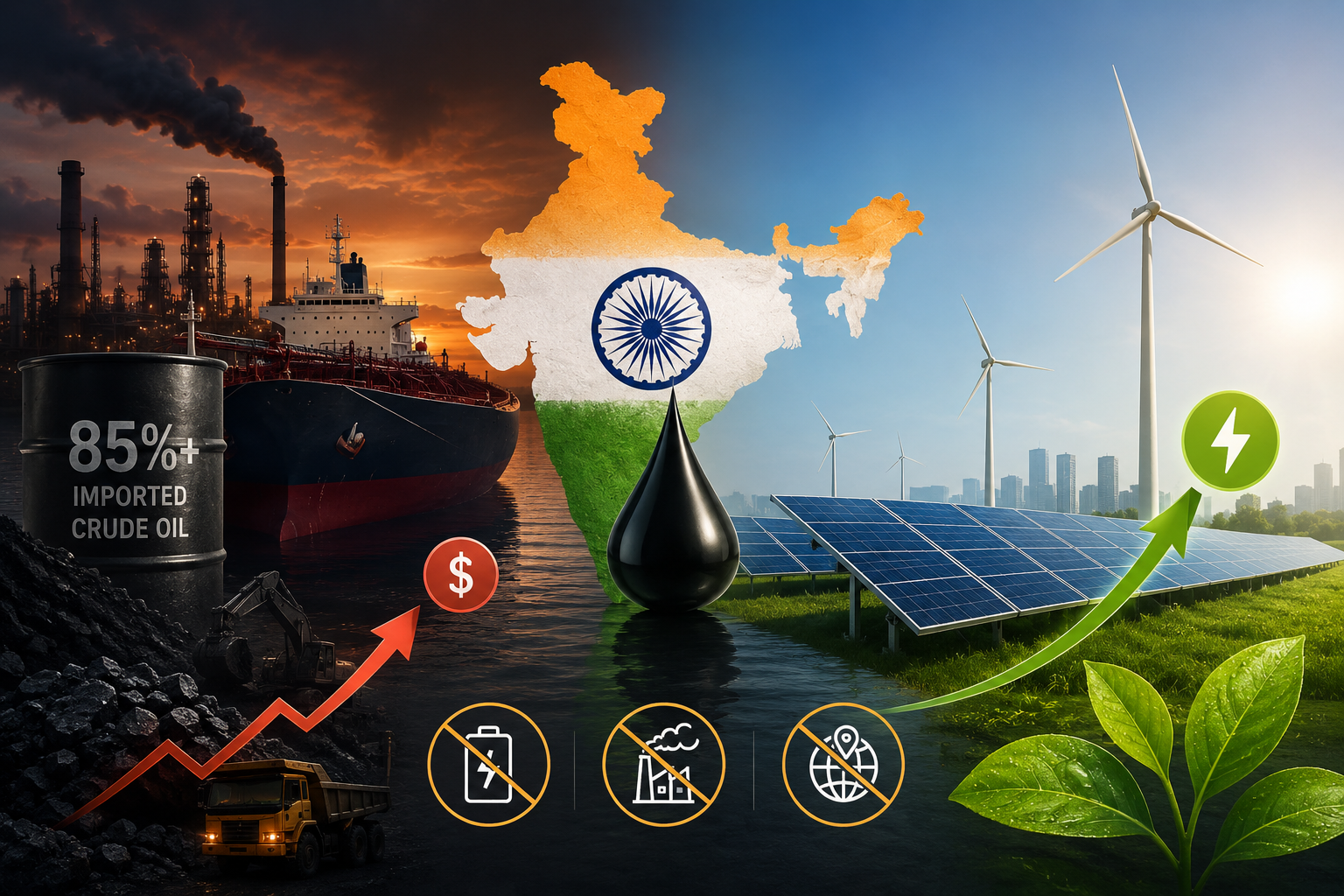
India is the world’s third-largest energy consumer, and its economic growth continues to drive energy demand. Despite significant investments in renewable energy, fossil fuels remain the backbone of the country’s energy system.
Key Numbers
- India imports approximately 85–88% of its crude oil requirements.
- The country consumes around 5.5 million barrels of oil per day.
- Fossil fuels (coal, oil, and natural gas) account for nearly 75–80% of India’s total energy consumption.
- Coal alone contributes about 70% of India’s electricity generation.
- India spends over $150 billion annually on crude oil imports, depending on global oil prices.
- The transportation sector is the largest consumer of petroleum products in the country.
Why India Depends on Fossil Fuels
1. Rapid Economic Growth
India’s expanding industries, transportation network, and urbanization require large amounts of reliable energy, much of which is currently supplied by fossil fuels.
2. Limited Domestic Oil Production
Domestic crude oil production meets only about 12–15% of national demand, making imports essential.
3. Growing Vehicle Population
India has over 350 million registered vehicles, creating sustained demand for petrol and diesel.
Three Key Roadblocks to Reducing Dependence
1. Energy Storage Limitations
Renewable sources such as solar and wind are intermittent. Large-scale battery storage remains expensive and insufficient to support round-the-clock power needs.
2. Heavy Dependence on Coal-Based Infrastructure
India has invested heavily in coal mines and thermal power plants. Replacing this infrastructure requires massive capital investment and time.
3. Import Dependence and Geopolitical Risks
A significant portion of India’s crude oil imports comes from overseas markets. Global conflicts, supply disruptions, and price volatility can directly impact India’s economy and energy security.
The Way Forward
- Accelerate solar, wind, and green hydrogen projects.
- Expand electric vehicle adoption and charging infrastructure.
- Invest in battery storage technologies.
- Improve energy efficiency across industries and households.
- Increase domestic exploration of oil and natural gas while transitioning to cleaner energy sources.
Conclusion
India’s dependence on crude oil and fossil fuels remains a major economic and strategic challenge. With over 85% of its oil needs met through imports and fossil fuels dominating energy consumption, the country faces significant risks from global price fluctuations and supply disruptions. Overcoming storage challenges, reducing coal dependence, and strengthening energy security will be critical for India’s transition to a cleaner and more sustainable future.
 Arth-Research
Leave a comment